Scientific American MIND: The Psychology of SUCCESS
Scientific American MIND The Psychology of SUCCESS: It’s not what you learn but how you learn
★☆☆☆☆
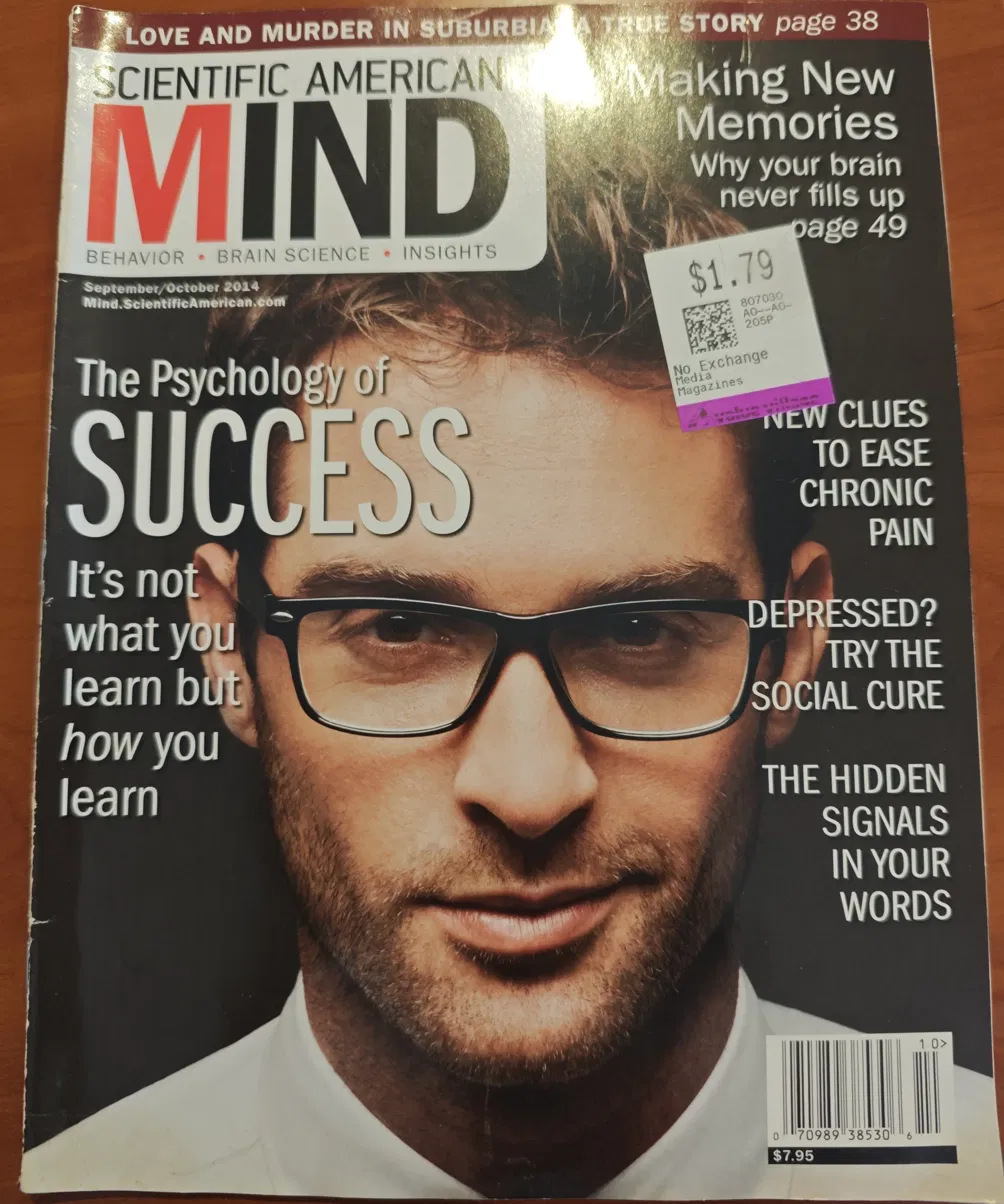
I got this from Value Village for $1.79. It was surrounded by a plethora of magazines about the British royal family. What were the circumstances that led to them being donated? Death in the family? Loss of interest? Bankruptcy..? Is there a specific magazine that covers the British royal family and only the British royal family?
That mystery was far more interesting than anything in this magazine.
I had zero annotations, that’s how boring it was.
This is my current value system for books:
- Was it an enjoyable read?
- If it wasn’t an enjoyable read, did I at least learn something useful?
- If it wasn’t enjoyable and I didn’t learn anything, did it at least improve my life a bit?
The stock images annoyed me. I hated stock images before AI was a thing. Take the Page 30 article, “The Power of Reflection”. It’s about the importance of metacognition, aka “an internal tribunal that rules on the soundness of our mental representations, such as a memory or judgement” (Page 32).
There’s a full-page image of a random white guy in a business suit, sitting thoughtfully. Then a photo of him standing, holding an impractically long piece of paper multiple meters long. Then him riding a bike. Then him in a meditation position under a fake cloud, still wearing that same business suit. Why??
I’m 90% sure that was the titular article, but the only takeaway was “metacognition is good.” How good? I dunno. Kinda good. Better than nothing good. Successful people do it sometimes good.
I’m totally telling on myself here, but sometimes the magazine seemed like it was trying to show off with them fancy words. Page 26: “Our eyes struggle to detect [the camouflaged man] because his body paint reduces the contrast between the edges of his body and the background, subverting the same principles of lateral inhibition that help us find contours in the other images.”
Why not just say: He + background = same color.
Maybe they just needed an excuse to include a colorful photo. I guess it’s hard to find relevant images for a magazine about the Scientific American MIND.
redeeming qualities (that are not at all redeeming)
The most interesting article was about a case of fatal domestic violence. How does that relate to the Scientific American MIND? I guess the killer was American, and he had thoughts? Don’t get me wrong. It was absolutely interesting, I just think it was also absolutely irrelevant.
There was a point about how emotional intelligence and happiness had a positive correlation, though it didn’t phrase it like that. Perhaps that’s sufficient motivation to develop it. Like, IQ probably correlates to higher financial success, but does it correlate to happiness? No? Then why even be smart??? I’m not going to search that up. IGNORANCE is BLISS
Page 73. “Studies have shown that assigning specific ethnicities to the victims in the trolley problem can change the pattern of responses”
They definitely meant it as an in-group vs outgroup thing. Buuuuut, I had a fun time imagining a fair unbiased study that covers all the countries.
Would you divert the trolley into a North Korean to save five Americans?
Yes? Then would you push a fat Tuvaluan off a bridge to save five Príncipense? Where do the Comorians, East Timorese, and I-Kiribati fall into the mix?
Lastly, I disliked the cover too. He looks so smug. Why is he watching me? Who is he, and if he’s nobody, why did they put a random nobody whitebread-looking guy on the cover???????????