21 Things You May Not Know About The Indian Act
★★☆☆☆
21 Things You May Not Know About The Indian Act by Bob Joseph (2018)
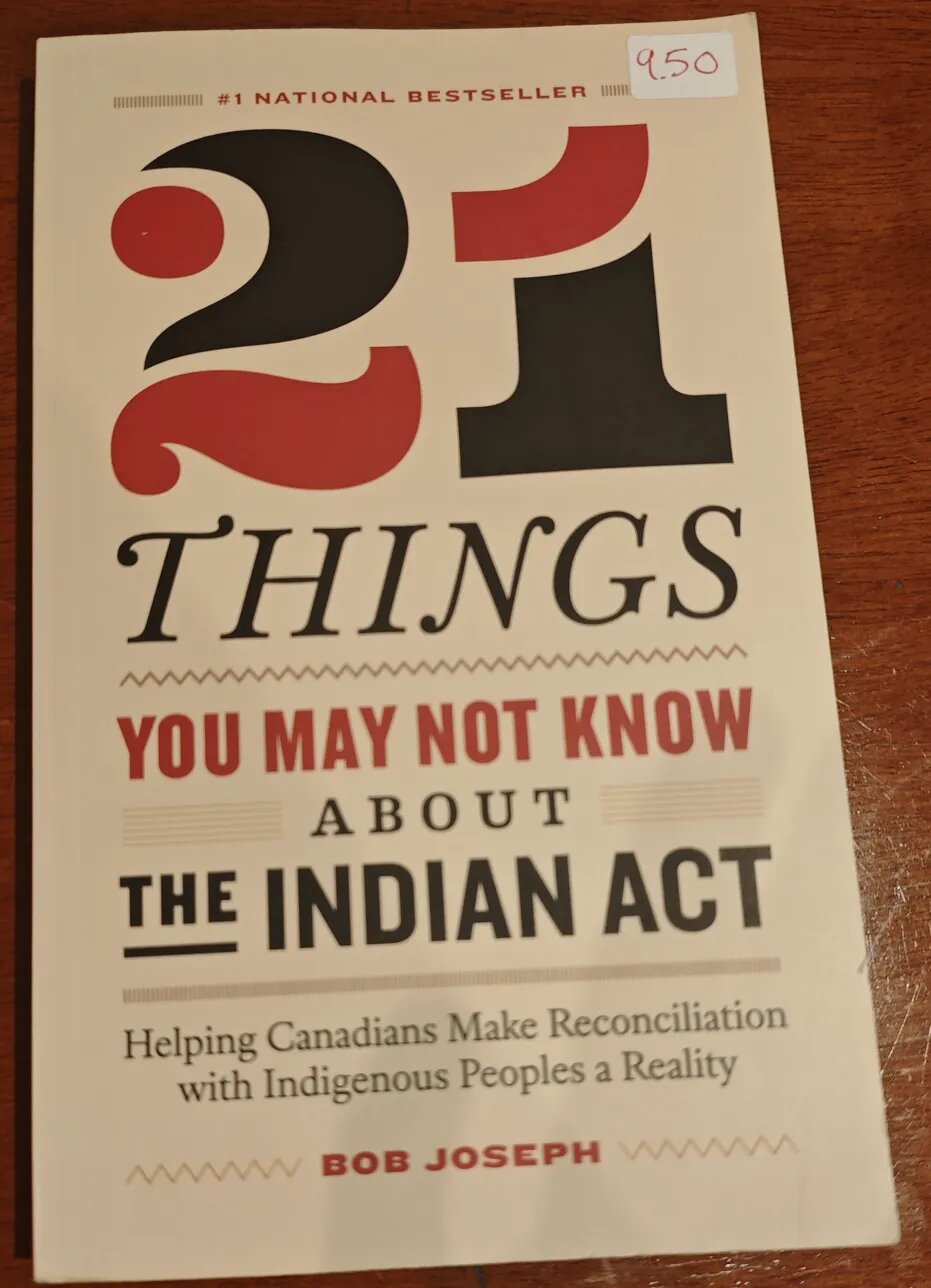
Firstly, it’s my fault for going to the wrong bookstore. It seems to be dedicated exclusively to school books. It’s not the bookstore’s fault, but it’s not my fault either, 1) because nothing is ever my fault, and 2) it didn’t say so anywhere!!! Certainly not in the first sentence on the website in the first Google Search result.
I love not being in school. Learning is more fun when it’s your choice. Choice, choice…
Main reasons for the 2/5 rating:
- I knew a lot of stuff already from high school history class.
Shoutout to my HS history teacher, Mr. M. He was really awesome. Most of my HS teachers were, actually.
Examples of the 21 Things that I knew already from school: 3 - Created reserves 12 - Created residential schools 13 - Forbade Indian students from speaking their home language 19 - Forbade Indian students from practising their traditional religion
If you didn’t know most of that, maybe because you’ve been out of school for longer than I have, and/or you’re not Canadian, this book could well be a three, four, even five star for you. And that is valid.
- The author includes many direct quotes from historical people and documents like the Indian Act, but I felt some of his interpretations were not supported by the text.
Page 57-58: “[The letter] shows the many rules parents were expected to follow:”
Paraphrased, because I am not transcribing all that.
November 18, 1948 Dear Parents, Christmas (white person holiday) from December 18th to January 3rd.
- You must get your kid yourself. If you cannot, another parent from your reserve can do it as long as you send a letter to the principal. “The children will not be allowed to go home alone on the train or bus.”
- Your kids must return!!!!! If they do not come back, WE ARE KEEPING THEM OVER THE NEXT CHRISTMAS (WHITE person holiday, because our culture is better, adopt it NOW).
From Principal
Okay, rule two sucks, I’m not arguing that. But two rules isn’t “many,” and I feel like rule 1 is not altogether unreasonable? The kids were under sixteen, and it is stated that many kids did die after escaping residential schools, in an attempt to come home.
Again: residential schools were bad.
- Appendix 3 was reallllly boring. The book itself ends at page 105, and then it’s 67 pages of Appendix. Appendix 1 is terminology - awesome, it was useful terminology, like the difference between “Aboriginal people” and “Aboriginal Peoples” and “First Peoples” and “First Nation.” Appendix is a timeline, cool, great. Appendix 3 is the 2015 Truth and Reconciliation Calls to Action, word for word, with zero explanation. You can view all of it here: https://www2.gov.bc.ca/assets/gov/british-columbians-our-governments/indigenous-people/aboriginal-peoples-documents/calls_to_action_english2.pdf
It’s not very exciting. Example:
We call upon the federal government to work with provincial, territorial, and municipal governments, churches, Aboriginal communities, former residential school students, and current landowners to develop and implement strategies and procedures for the ongoing identification, documentation, maintenance, commemoration, and protection of-
but repeated twenty times, nearly verbatim.
More of a neutral point, but: with topics I don’t know a lot about, it can be hard to distinguish the author’s view from the generally accepted consensus. This is worth reflecting about for things you do know a lot about.
Example: Bob Joseph wants to dismantle the Indian Act. Is that view popular among First Nations People or is it his own educated opinion?
The book has lots of good qualities though. And unlike Chasing Perfect, it does deserve a review that ends on a good note.
I like that it was published by Indigenous Relations Press, and the cover was charming. Things with personality are good.
I learned some things:
- The stereotype that Indians can’t tolerate alcohol comes from them not being allowed to have it, so they would “consume [it] rapidly to avoid being arrested and fined.”
- Since their travel was limited, many Indians were meeting each other for the first time when they enlisted in WWI, and that’s what helped them advocate for their rights afterward.
- The initial enfranchisement deal was so bad that there was literally one guy in all of Canada who took it. One. I’m someone who believes having a choice to do stupid things is better than no choice, but this makes me reflect. It harms the rest of your community, absolutely. But what about the very existence of the choice being offensive/demeaning to your existence?
The single most powerful part of the book for me: 6 - Renamed individuals with European names I wondered, going into the book, why a “Bob Joseph” was writing it.
[West coast Indian agents] often used Biblical names from different religious denominations […] Or they used their own names […] this is how the process would have unfolded: An Indian agent would ask me my name, I would say ‘k’ack-sum nakwala’, and they would write down ‘Bob Joseph.’
It’s bad enough to give someone a name against their will, but it’s disgusting to name them after yourself.
It also highlights how they were set up to fail at every turn. You can’t vote, you can’t socialize with non-Indians even if you wanted to, you can’t even leave the reserve without permission, you’re the only group that’s forbidden from drinking, your children are forcibly taken away to go to residential schools, except the residential schools have a higher mortality rate than WWI, your cultural gatherings are banned, you’re not allowed to hire lawyers, you can’t sell your crops because the other farmers will get jealous, etc etc etc. And you’re not allowed to buy ammunition, because the government is (rightfully) scared that you’ll organize an uprising, because why wouldn’t you? You’re not allowed to hire lawyers, remember, and you can sign a million treaties but the government will keep breaking their promises, and what are you going to do about it? Can you feel the frustration??
I didn’t enjoy the read, but it was valuable nonetheless.