A Little Life
★★★★☆
A Little Life by Hanya Yanagihara (2015)
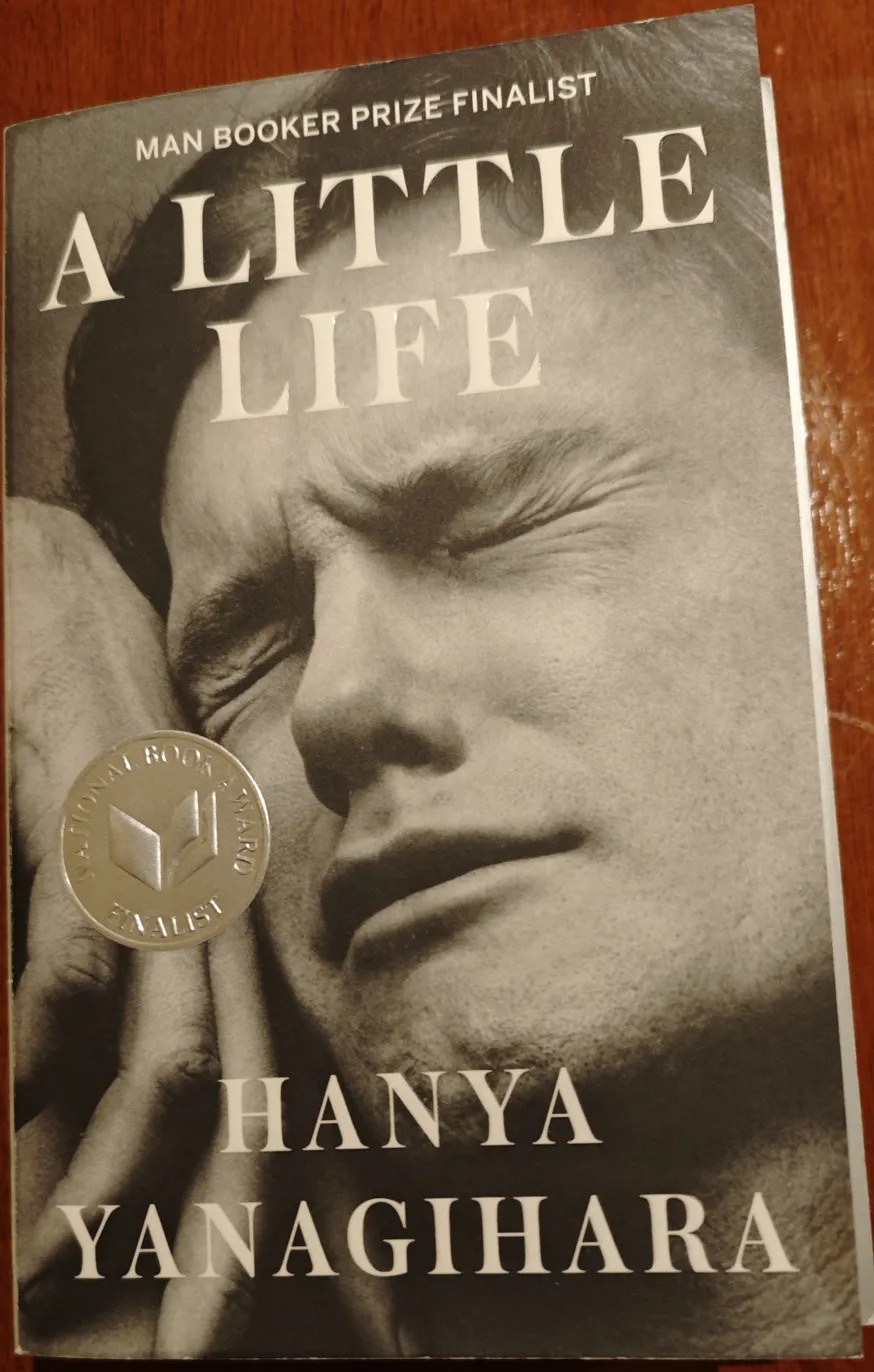
This is not my most controversial review, but it’s definitely the most controversial book I’ve reviewed so far. There are literally famous criticisms of this book:
https://www.nybooks.com/articles/2015/12/03/striptease-among-pals/ - Paywalled being one
https://www.pulitzer.org/winners/andrea-long-chu-new-york-magazine - and this one being another. It won a Criticism Pulitzer, though I thought the line between criticism and personal attack was pretty thin.
This type of book inherently makes you wonder about the author, though. She’s written three books and you can see the similarities. Gay men. Photos as the cover. Human experience over plot. I did a little research, and there was one quote she said that I found inspirational. “I’m not the smartest or hardest-working or most educated person, but I am the best at time management.”
Trivia: The cover photo is called Orgasmic Man and it depicts a man in “the highest pitch” of his, well, you know. So the title A Little Life is like a wordplay of la petite mort and it could also be construed as irony because our protagonist Jude is utterly without sexual desire and it could be a reference to someone in the book telling him to show “a little life”.
It’s 804 pages. The first 200ish pages aren’t sad; I was wondering if all the reviewers calling it a super sad book were exaggerating. No. They’re not. If you didn’t find it sad, can you name one book that IS sad?
Haters say it’s trauma porn. Ok, but what if I like trauma porn? What then?
I wouldn’t call it “gratuitous”, but a reasonable person could conclude otherwise. He might argue that is triggering, that there is no need to describe [self harm act] in such detail, that it glorifies suicide. I will say that this book is as graphic as a mainstream literature gets. If you find something worse, I guarantee it is not mainstream.
The quoted review on the back calls it “An epic study of trauma and friendship” and that’s accurate. Trauma and friendship are the two central themes. Jude is OK. Then he’s sad. Then he’s happy. Then he’s sad. Happy. Sad. Happy. Sad. Saaaaaaaaaaaad. The end.
Is the happiness necessary to make the sad moments hit? Yes, and the reverse is true as well. I suspect that applies to life too. If you can’t go up and up and up forever (hedonic treadmill, anyone?) then maybe it’s better to have some sadness rather than flat unchanging happiness.
There was some criticism about the author writing about gay males while being neither gay nor male. On one hand, I liked the gayness. Namely that it was not a significant part of the plot, but neither were they male + female with some pronouns switched. On the other hand, am I even allowed to have an opinion? Behold my attempt at empathy. How would I feel if someone wrote a bestselling fiction book about a woman’s miserable life with a macaw, how she has to endure daily 7am screams (“louder than jet engines!”), had multiple fingers amputated, her social life is ruined, no vacations ever again, the bird needs five “direct” hours of interaction a day rain or shine, and also she’s stuck with it for 80 years because she’s Responsible? And the author’s credentials: she has two budgies.
I liked the chapter format. There’s a variety of POV character, usually third person limited, with three second person chapters. Part one was exposition. You get to meet the four friends, but it’s only three POVs and you’re wondering when the “brilliant and enigmatic” guy’s POV shows up. Good thing the rest of the book is about him.
Is this “high” literature? I thought it was low, being mainstream and easy to read. I have the belief that high literature should be boring, and that suffering builds character. I was not suffering through the pages. I enjoyed the feeling of slowly, steadily chunking away at it: A bite here, a little nibble there with my dinner, a big chunk before bed. It takes a specific type of big and interesting enough book to get that vibe, which reminds me of my younger years. Huddled alone in a corner during recess to get my pages in.
POINT ABOUT POOR PEOPLE NOT MATTERING: Everyone that matters in this book is rich. They range from the top 1% (or however much a Harvard professor makes, which I guess is maybe not top 1%) to top 0.1%ish (Jude & co) to, like, top 0.001%. Did the author think we wouldn’t care about poor people? Worse, is she right?
I read the Red Rising series not too long ago. In the later three books, there were two POVs (Lyria and Volga, if you’re wondering) of everyman-type characters and I found them the most boring by far. Especially next to “smartest person in the solar system,” “best thief in the solar system,” and the YA male fantasy war god dude himself.
Do rich and powerful lives matter more to us, even in these fictional worlds?
Why is it 800 pages, you might ask? Because of stuff like this:
Then he turns on his phone, checks his missed calls: Andy, JB, Richard, Harold and Julia, Black Henry Young, Citizen, Andy again, Richard again, Lucien, Asian Henry Young, Phaedra, Elijah, Harold again, Julia again…
Phaedra sounds pretty. Paris and Phaedra. That has a nice ring to it, no? I’m adding it to my shortlist.